A thoughtfully curated collection of articles on innovative solutions, brought together to inspire and inform.
-
AI system is spotting California wildfires as soon as they start | The Optimist Daily

ALERTWildfire has been installed in Northern California and is ready for testing as the hot summer season arrives.
-
Trump’s rural energy freeze hits Midwest, GOP districts hardest

More than three-quarters of federal Rural Energy for America Program grants over the last decade have gone to Republican congressional districts.
-
Belfast venues unite to eliminate single-use plastic cups | The Optimist Daily
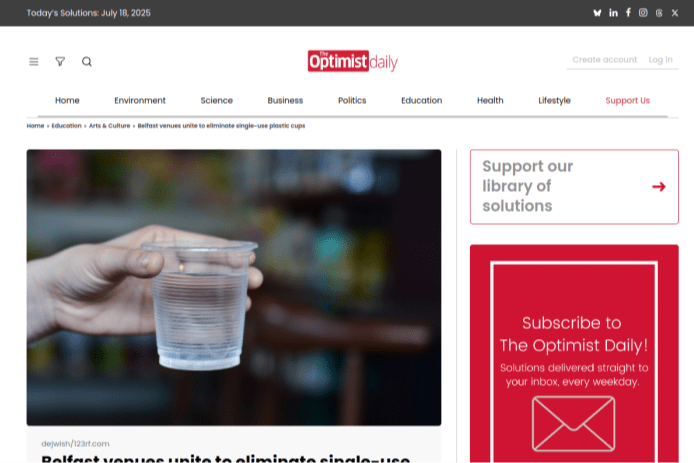
A bold step toward sustainability, Belfast sets the standard for entertainment venues in Ireland and the UK.
-
Tiny fire detector inspired by nature could transform wildfire prevention | The Optimist Daily

A pinecone-sized sensor made of wax and charcoal offers a low-cost, eco-friendly way to detect wildfires early—before they become devastating.
-
What is eco-grazing? Ancient horses and bison battle Spain and Portugal’s wildfires | The Optimist Daily

A ground-breaking wildfire prevention strategy uses rare Garrano horses and European bison to conserve the natural heritage of the Iberian Peninsula.
-
A closer look at vertical agrivoltaics
pv magazine visited a 1.9 MW agrivoltaic plant in Austria where pumpkins and soy are cultivated beneath vertically mounted PV structures supplied by Next2Sun.
-
Okra and fenugreek extracts remove up to 90 percent of microplastics from water | The Optimist Daily
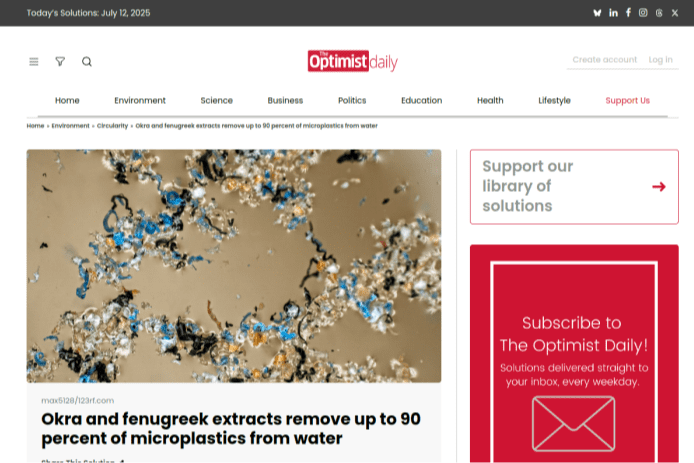
Sticky plant-based polymers from okra and fenugreek can effectively remove up to 90 percent of microplastics from polluted water. Here’s how it works.
-
How a Florida environmental group scored a win against big oil
Following the destruction from 2010’s Deepwater Horizon oil spill, an anti-drilling coalition took action with HB 1143 – and got it signed by DeSantis
-
As California’s Emissions Rules Faces Court Battles, States Scramble To Save Their Climate Goals
With or without authority to regulate heightened tailpipe emissions, states plan to meet climate goals.
-
Turning plastic into pain relief: scientists transform PET waste into paracetamol | The Optimist Daily
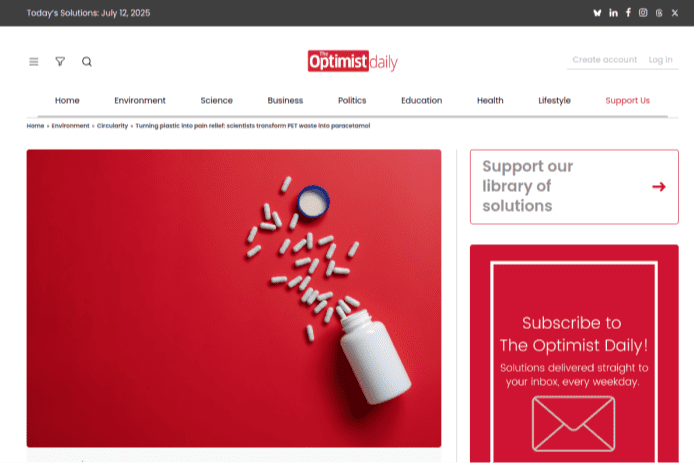
Scientists at the University of Edinburgh have developed a way to convert plastic bottle waste into paracetamol using genetically engineered E. coli.